

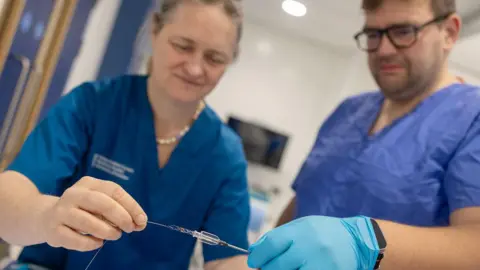
Doctors from Scotland and America have successfully completed what is considered a world-first stroke procedure employing a robot.
The lead surgeon, associated with a Scottish university, performed the remote thrombectomy - the elimination of circulatory obstructions after a stroke - on a medical specimen that had been provided for research.
The surgeon was positioned in a treatment center in the location, while the subject undergoing procedure with the device was at another location at the academic institution.
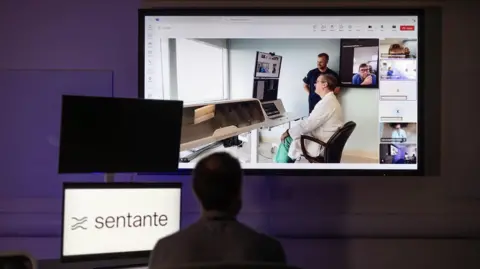
Later that day, Ricardo Hanel from the US location utilized the technology to carry out the first transatlantic surgery from his Jacksonville base on a donated cadaver in Scotland over 4,000 miles away.
The team has called it a potential "transformative advancement" if it becomes approved for clinical application.
The medics believe this technology could change stroke treatment, as a limited availability of expert care can have a direct impact on the recovery prospects.
"The experience was we were seeing the early preview of the coming era," said the lead researcher.
"Whereas before this was thought to be science fiction, we proved that every step of the surgery can already be done."
The Scottish institution is the global training center of the global medical association, and is the exclusive site in the UK where medical professionals can operate on cadavers with actual blood pumped through the arteries to replicate operations on a actual patient.
"This represented the pioneering moment that we could perform the entire surgical process in a actual human specimen to demonstrate that every phase of the surgery are possible," said the lead expert.
Juliet Bouverie, the head of a stroke charity, labeled the long-distance operation as "a remarkable innovation".
"During many years, residents of isolated regions have been deprived of access to clot removal," she continued.
"Such technological systems could address the disparity which persists in stroke treatment throughout Britain."
How does the technology work?
An blockage stroke takes place when an artery is blocked by a clot.
This interrupts vascular flow to the neural matter, and brain cells lose function and expire.
The optimal therapy is a surgical extraction, where a specialist uses surgical tools to clear the obstruction.
But what transpires when a individual is unable to reach a professional who can conduct the operation?
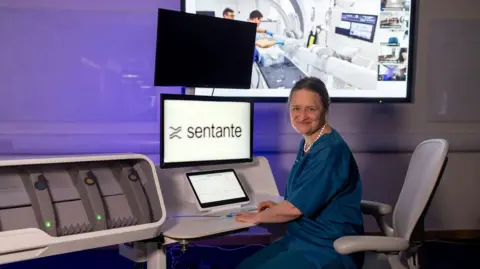
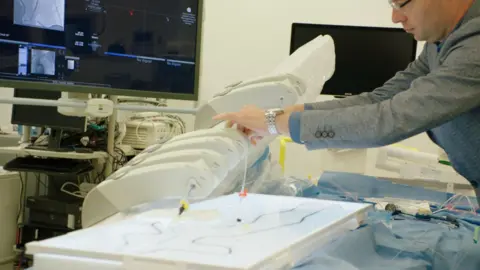
The medical expert explained the trial proved a robot could be attached to the same catheters and wires a surgeon would conventionally utilize, and a medic who is present with the individual could easily connect the tools.
The surgeon, in a different place, could then hold and move their own wires, and the mechanical device then executes comparable motions in real time on the subject to carry out the thrombectomy.
The subject would be in a medical facility, while the surgeon could carry out the operation with the automated equipment from any location - even their own home.
The lead researcher and the neurosurgeon could observe real-time imaging of the specimen in the trials, and monitor progress in real time, with the Scottish specialist saying it took merely twenty minutes of training.
Major corporations prominent manufacturers were contributed to the initiative to guarantee the network connection of the automated system.
"To perform surgery from the America to the Scottish nation with a minimal delay - a blink of an eye - is absolutely amazing," commented the medical expert.
Innovations in cerebral healthcare
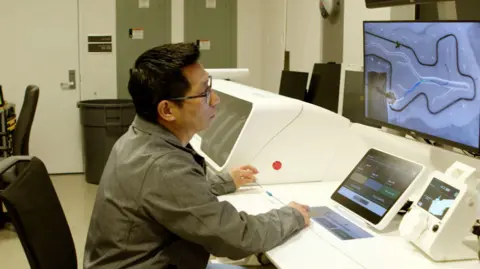
Prof Grunwald, who has won an award for her research and is also the vice president of the global healthcare association, stated there were primary challenges with a traditional procedure - a global shortage of doctors who can do it, and intervention relies upon your physical place.
In the Scottish nation, there are only three places patients can receive the procedure - three major cities. If you don't live there, you must journey.
"The intervention is highly dependent on timing," explained the lead researcher.
"Every six minutes delay, you have a 1% less chance of having a positive result.
"This system would now provide a new way where you're not reliant upon where you dwell - preserving the precious time where your neural tissue is otherwise dying."
Healthcare information revealed there were {9,625 ischaemic strokes|numerous cerebral events|
